

GST Input Tax Credit Rules: Eligibility, Claim Process, Time Limit & Latest Compliance Guide (2026)
Businesses registered under GST often treat Input Tax Credit as a routine part of their monthly tax compliance. However, GST input tax credit rules contain several conditions that businesses must satisfy before claiming and retaining ITC. Simply having a GST invoice does not automatically mean that the entire GST amount can be claimed as credit. A business also needs to consider whether the goods or services are used for business purposes, whether the required documents are available, whether the supplier has furnished the relevant invoice details, whether the return requirements have been met, whether the credit falls within the prescribed …
Input Tax Credit (ITC) Under GST: Eligibility, Conditions & Common Mistakes Complete Guide (2026)
Understanding Input Tax Credit (ITC) Under GST The Goods and Services Tax (GST) was introduced to simplify India’s indirect tax system by replacing multiple taxes with a unified taxation framework. One of the biggest advantages of GST for businesses is the availability of Input Tax Credit (ITC) under GST, a mechanism that helps reduce the overall tax burden and prevents the cascading effect of taxes. Whether you’re a manufacturer purchasing raw materials, a retailer buying inventory, a service provider paying GST on professional services, or an e-commerce business investing in technology and logistics, Input Tax Credit plays a vital role …
GST on Export of Services in India: Rules, Conditions, LUT & Examples (2026 Guide)
India has become a global hub for exporting professional and digital services. From software development and IT consulting to digital marketing, legal advisory, financial consulting, engineering services, and business process outsourcing, thousands of Indian businesses now work with clients across the world. One of the most common questions these businesses ask is: Is GST applicable to the export of services? The answer is yes, but not in the way many businesses assume. Under the Goods and Services Tax (GST) framework, the export of services is treated as a Zero-Rated Supply, which means the transaction remains taxable under GST law but …
Reverse Charge (RCM) vs Forward Charge Under GST: Key Differences Explained (2026 Guide)
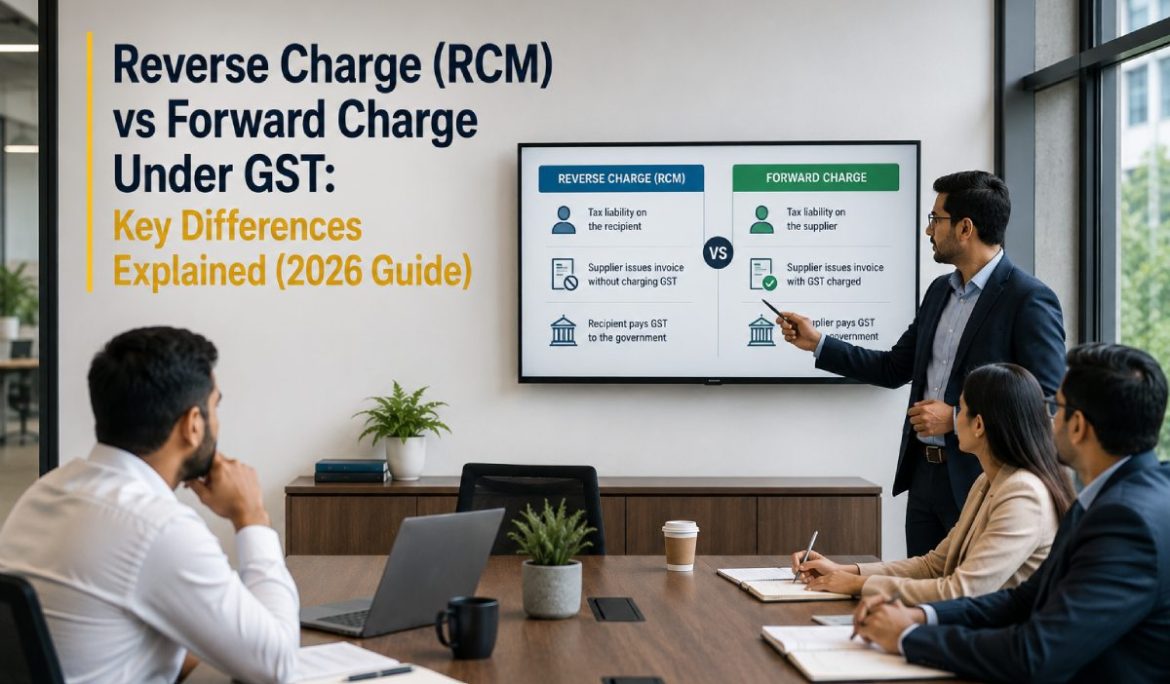
Understanding who is responsible for paying Goods and Services Tax (GST) is essential for every business operating in India. While most GST transactions follow the standard Forward Charge Mechanism (FCM), certain specified transactions fall under the Reverse Charge Mechanism (RCM), where the responsibility to pay GST shifts from the supplier to the recipient. Many businesses confuse these two mechanisms, leading to incorrect GST filings, missed tax liabilities, penalties, or loss of Input Tax Credit (ITC). Whether you are a startup, SME, manufacturer, service provider, or established enterprise, understanding the Difference between RCM and Forward Charge is crucial for maintaining GST …
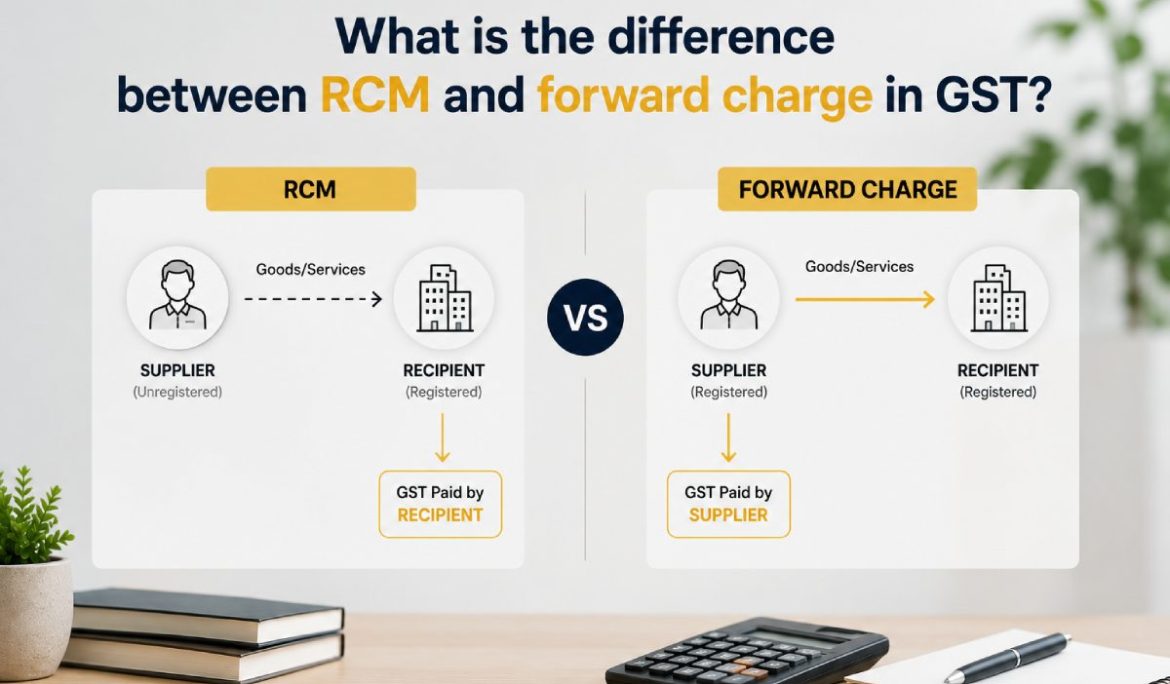
What is the difference between RCM and forward charge in GST?
Goods and Services Tax (GST) aims to have a single unified system in place that simplifies indirect taxes and increases compliance for tax payment in the country, but there are cases where confusion can arise between how RCM GST and Forward Charge GST work. Both mechanisms indicate who needs to pay GST to the government, but depending on the nature of the transaction, the liability will differ. Business owners, accountants, tax professionals, and startups must be aware of how both mechanisms of GST work. In this guide, we will discuss how the RCM GST and the Forward Charge GST differ, …
Reverse Charge Mechanism (RCM) Under GST: Complete Guide for Businesses (2026)
GST has significantly simplified India’s indirect tax system by creating a unified taxation framework for goods and services. Under normal GST transactions, the supplier collects GST from the customer and deposits it with the government. However, the GST law also contains a special provision known as the Reverse Charge Mechanism (RCM), where this responsibility shifts from the supplier to the recipient. Understanding the Reverse Charge Mechanism under GST is essential for businesses because non-compliance can lead to interest, penalties, denial of Input Tax Credit (ITC), and unnecessary disputes with tax authorities. Many businesses unknowingly become liable under RCM under GST …